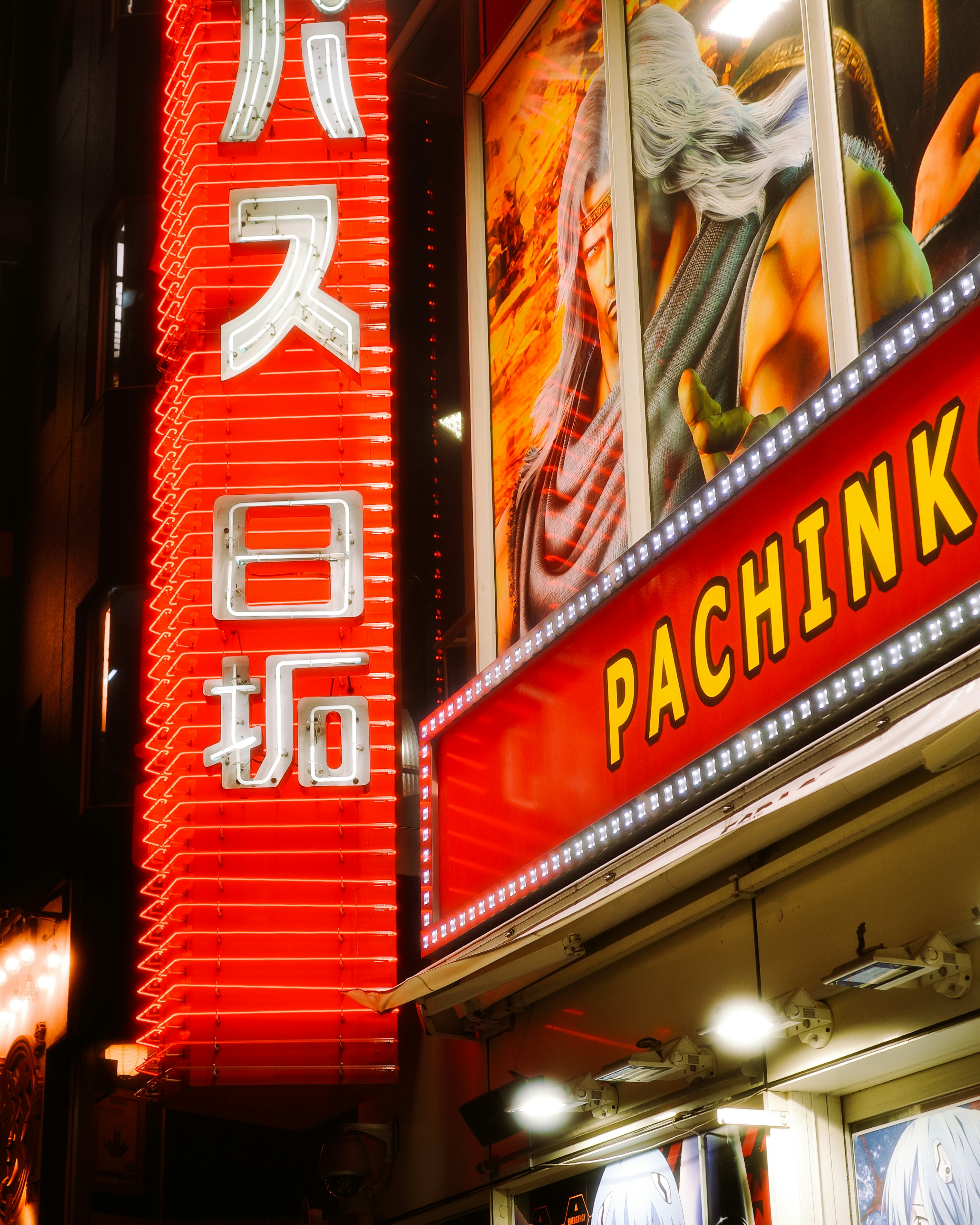
Understanding Pachinko

Japan's Iconic Vertical Pinball Game

Pachinko represents a distinctive form of mechanical entertainment that has become deeply integrated into Japanese culture. This vertically oriented arcade game combines elements of chance, skill, and strategic play within a framework that extends beyond mere gaming into broader social and economic systems.

The Essence of Pachinko

Pachinko operates as a vertically positioned arcade apparatus where small steel spheres cascade through a field of strategically arranged pins. The fundamental objective involves directing these balls toward designated collection areas that yield additional spheres or valuable prizes. Unlike conventional arcade entertainment, pachinko establishes a distinctive paradigm where mechanical dexterity intersects with probabilistic outcomes, creating an experience that transcends simple recreational diversion.

Game Mechanics:
Players launch steel balls into a vertical playing field filled with thousands of pins. The balls bounce unpredictably off these pins, creating a mesmerizing cascade effect. Success depends on getting balls to fall into specific pockets that award more balls or prizes.
Strategic Elements:
While largely a game of chance, experienced players develop techniques for ball trajectory and timing. The pin layout and launcher mechanism allow for subtle control that can influence outcomes over multiple plays.
Prize System:
Successful plays yield additional balls or special tokens. These can be accumulated and exchanged for prizes at an adjacent counter, creating a secondary economic layer to the gaming experience.
Pachinko machine mechanics
Pachinko machine interior

Historical Development

Pachinko's origins trace back to the early 20th century, evolving from Western-inspired pinball machines adapted to Japanese sensibilities. The first commercial pachinko machines appeared in Nagoya during the 1920s, initially designed as children's entertainment. Over subsequent decades, the game transformed into its current sophisticated form, with increasingly complex pin arrangements and electronic enhancements. The post-World War II economic boom solidified pachinko's position as a cornerstone of Japanese leisure culture, with machines becoming more technologically advanced and venues more elaborate.

Distinctive Characteristics

Mechanical Precision

Each machine contains thousands of precisely engineered pins that create unpredictable ball trajectories, blending physics with probability in a uniquely Japanese entertainment format.

Social Integration

Pachinko halls function as social hubs where players interact, share strategies, and participate in collective gaming experiences that extend beyond individual play.

Economic Ecosystem

The prize exchange system creates a sophisticated economic model where gaming outcomes translate into tangible rewards, supporting both the industry and player engagement.

Cultural Adaptation

What began as imported entertainment evolved into a distinctly Japanese institution, reflecting cultural preferences for indirect competition and communal leisure activities.

Pachinko vs Pachislot

While both represent prominent forms of Japanese arcade entertainment, pachinko and pachislot maintain fundamental distinctions. Pachinko emphasizes mechanical ball physics and pin-based randomization, whereas pachislot incorporates electronic reels and digital randomization systems. Pachinko demands physical ball launching and trajectory management, while pachislot focuses on button-based interaction and reel-stop timing. Both create immersive environments but through markedly different technological approaches and player engagement models.

Pachinko Mechanics

Operates through physical ball dynamics, pin-based randomization, and mechanical precision. Players physically launch balls and observe their unpredictable descent through complex pin arrangements.

Pachinko gameplay
Modern pachinko technology

Contemporary Evolution

Modern pachinko machines integrate advanced electronics, LCD displays, and sophisticated payout mechanisms. Contemporary designs incorporate themed elements, animated displays, and enhanced prize systems that maintain traditional mechanics while embracing technological innovation.

Cultural Perspectives

★★★★★
"Pachinko represents the perfect fusion of Japanese precision engineering and entertainment design."
Gaming Technology Analyst
★★★★★
"The social atmosphere and mechanical elegance make pachinko a uniquely Japanese cultural experience."
Cultural Anthropologist
★★★★★
"Understanding pachinko reveals deeper insights into Japanese approaches to leisure and probability."
Entertainment Researcher

Economic and Social Framework

Pachinko operates within a complex economic framework where gaming outcomes interconnect with broader commercial systems. Prize balls convert to special tokens at venue counters, which then exchange for merchandise or additional gaming credit. This layered economic model supports extensive retail networks and creates employment opportunities across multiple sectors. Socially, pachinko halls function as communal spaces where individuals from diverse backgrounds converge, establishing informal social networks and shared cultural experiences that extend beyond gaming itself.

The industry's economic impact extends throughout Japan, supporting manufacturing, retail, and service sectors while contributing significantly to local economies. Modern pachinko represents more than entertainment—it embodies sophisticated commercial engineering that balances player engagement with sustainable business models.

Access to pachinko and pachislot facilities in Japan is limited to individuals aged 18 and older. Those under 18 are not permitted entry or participation. This resource serves informational purposes exclusively.